The Region of Dreams seems to be accessible from most of the planes, since creatures can sleep and dream anywhere. It is the place where dreams come to existence with complete disregard to the waking world. Whenever one falls asleep, its mind goes to the Region of Dreams. Ordinarily, dreams have little effect on either the dreamer or on the Region of Dreams itself. Dreams can affect the emotions of the dreamer, but little else. Once the dreamer wakes up, the dream fades away, but its echo forever resonates within the Region of Dreams.
The Region of Dream is filled with undifferentiated dream-stuff, thus it would exist regardless of if creatures were dreaming or not. Its edges expand and contract continuously as dreamers sleep and wake, creating various dreamscapes. These dreamscapes last a short time and they rarely impinge on one another accidentally.
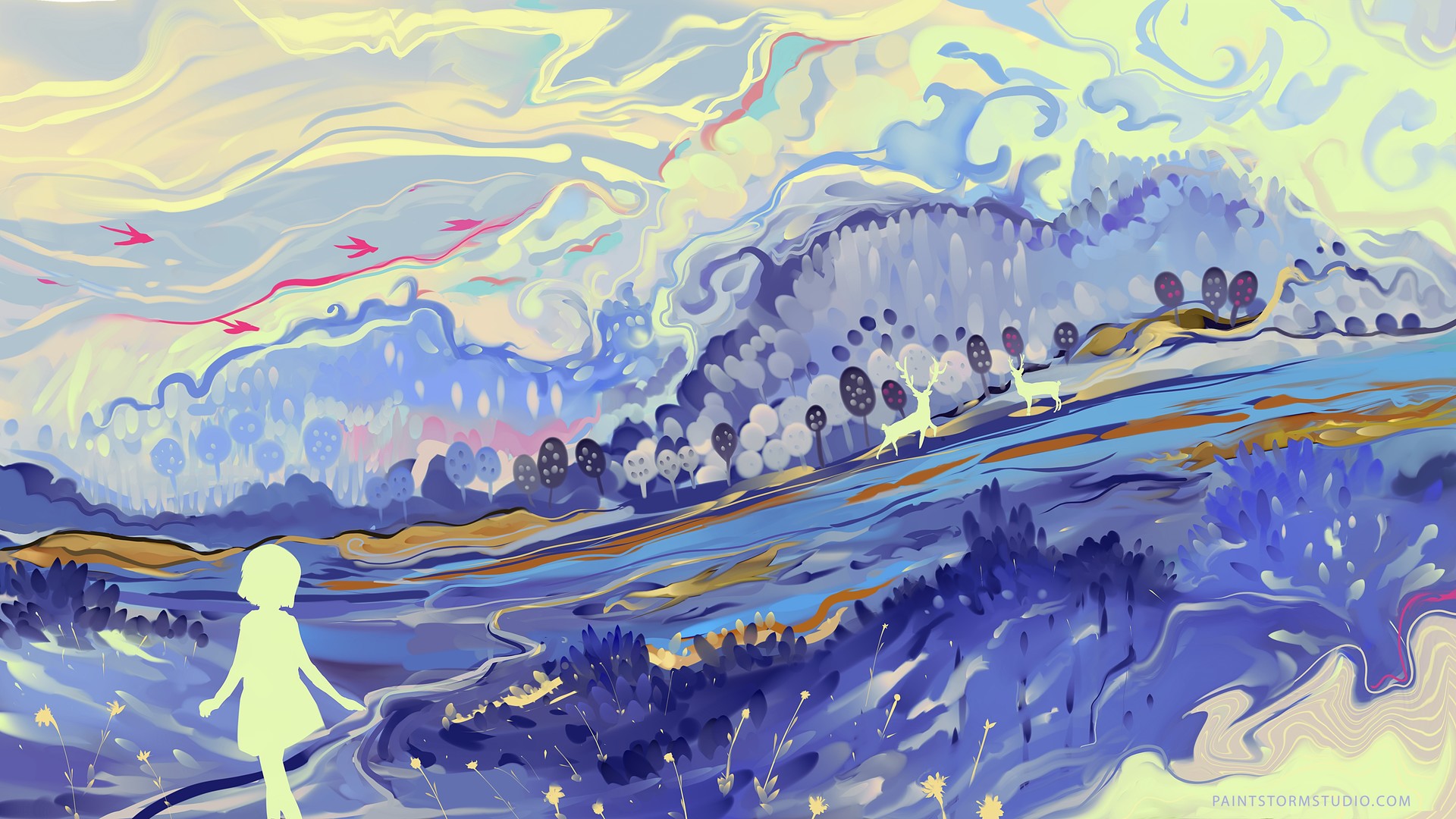 Dreamland by Hangmoon Alexander Komarov
Within the Region of Dreams, dreamers participate in separate and extremely personal dream scenes of their own subconscious creation: the dreamscape.
Most dreamscapes are small; representing a single building, a clearing in a forest, a misty road, or other limited area. On some occasions, some dreamscapes can extend over a few miles. They can contain all manner of oddities, architecture, scenery, and inhabitants. Dreamscapes vary wildly from one another, and they only share one feature: they have a dreamer who created it.
The dreamer’s unconscious mind forms the dreamscape and moves through it, usually unconscious of the fact that they are dreaming at all. The dreamer alters large or small aspects of their personal dreamscape, though they never do so consciously. Dreamscapes usually burst as soon as the dreamer awakes, but on occasion, a dreamscape can linger or survive permanently under unusual circumstances or magic.
Sometimes, dream elements from one dreamer’s personal experience may leak into the dream of another. The reason for this is unknown, though some speculate it has to do with the nature of the plane itself.
In extremely rare cases, a dreamscape can rupture, sending its pieces, dream-creatures and visitors into other dreamscapes, or other planes. These objects, which are made from dream-stuff, can retain a physical state for up to 1d100 hours after the dreamer has woken up. When that time has passed, the dream-stuff becomes undifferentiated once again and returns to the Region of Dreams. In 1% of these cases, these dream elements can achieve permanent reality. For example, this could happen in the case of a dreamer who is stuck in a permanent stasis, forever dreaming and never waking up. Under normal circumstances, if the dream-self was expelled with the rupture, the dreamer would wake up.
While wandering on a plane, it is possible to ‘’walk in’’ a ruptured dreamscape. These ruptures usually appear as tattered 10-to-80-foot diameter openings. Those who have experienced Dreamscape Ruptures can attest to the dangers of these anomalies.
Planar travelers can come across and ‘’walk into’’ a ruptured dreamscape. These travelers who pass through the tattered edges of a ruptured dreamscape physically enter into the dream contained within, and they are therefore subject to the environment and conditions of that particular dream. (For more information on this subject see Dreamscape Ruptures above) Although this method doesn’t allow to reach the Region of Dreams itself, it allows for an individual to experience what it’s like to wander within a dreamscape.
The Region of Dreams is of a mildly neutral alignment and has the following traits:
Within the Region of Dreams, the strength of gravity is the same as on the Material Plane. However, each dreamscape can pull in a different direction. In some rare cases, other dreamscapes can have different gravity traits.
For every 10 minutes spent in the Region of Dreams, only 1 minute passes on the Material Plane, but the nature of this plane makes it so whatever one experiences there feels vague, blurry, and distant from reality. No matter what happens within the Region of Dreams, only memories remain when one leaves it. When dreaming, the dreamer cannot truly cast or learn spells, and items can’t be gained, nor lost.
The Region of Dreams is infinite, but dreamscapes are finite. Most of the dreamscapes are small, although some can seem much larger depending on the nature of the individual dream.
Dreamscapes within the Region of Dreams are strongly tied to their dreamers. Thus, dreamscapes vary wildly from one another. The Region of Dreams contains dream-stuff, which is, in its normal state, as ephemeral as a thought. Dreamscapes are born from dream-stuff when a dreamer’s mind plunges into the Region of Dream and solidifies. From this point on, the Dreamscapes have the alterable morphic trait, similar to the Material Plane.
Spells can be cast normally in a dream, but aren’t actually cast by the physical body. This means any spell slots expended while dreaming is regained upon waking up and the prepared spell list hasn’t been modified. Similarly, any spell that was still in effect immediately ends when the dreamer leaves the Region of Dreams.
A wide variety of creatures can be found within the Region of Dreams. The creatures living within the dreamscapes are created through the whim of the dreamer. Whether it is an adorable bunny, or a horrifying cluster of the most grotesque creatures prancing around; anything is possible.
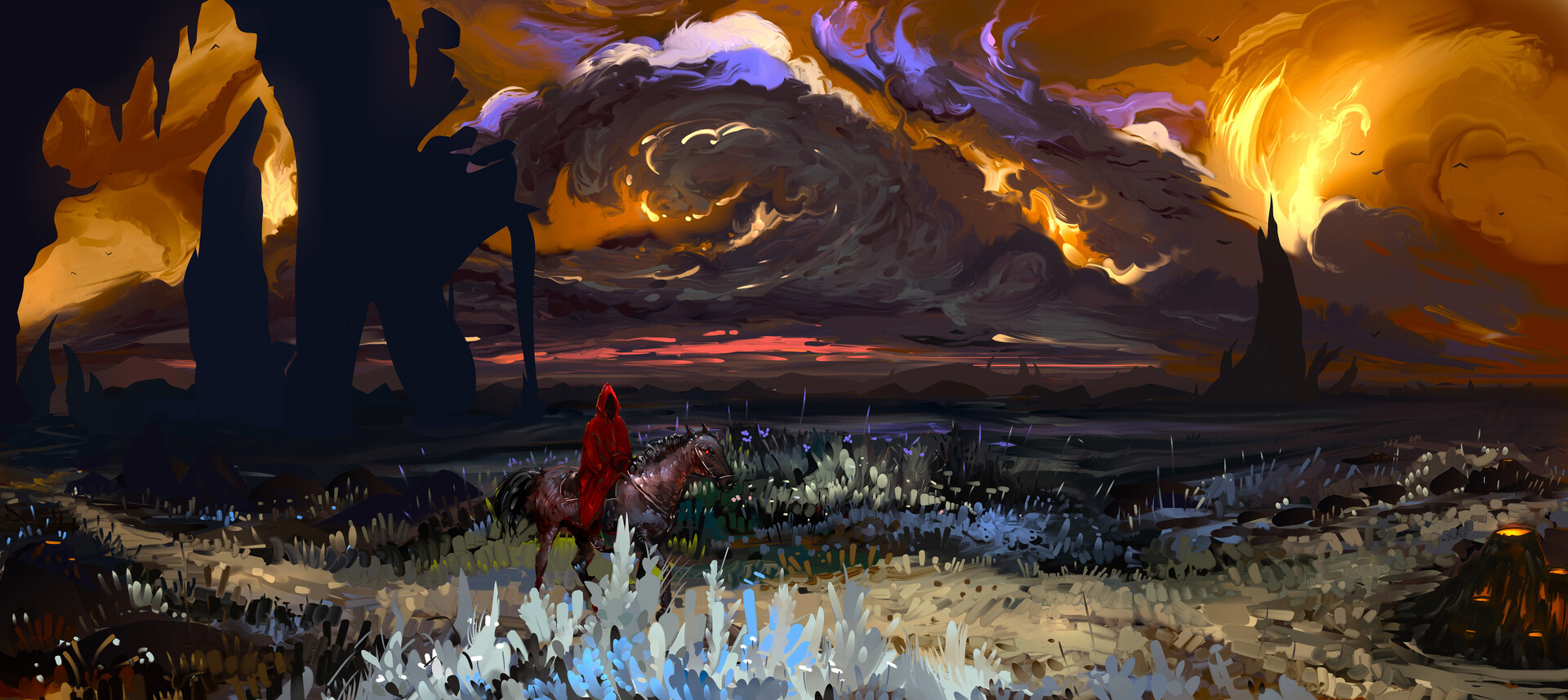 Dark Land by Hangmoon Alexander Komarov
Since the Quori come from the Eberron setting, they are reflavored here to fit within the Forgotten Realms setting.
Their ‘’dream-lords’’ theme has been removed, but they remain dream creatures with the aberration type that are native to the Region of Dreams. They could also be found within the Demiplane of Nightmares.
Within the Region of Dreams and Demiplane of Nightmares dwell creatures known as Quori. Under normal circumstances, these creatures are unable to escape the Region of Dreams or the Demiplane of Nightmares from which they are native. Quori are considered as aberrations, but their specific and special nature allows them to bond with a humanoid, with the body of the humanoid serving as a container for the Quori’s spirit. These instances are uncommon, but when a Quori wishes to escape its native place, it seeks to bond with a humanoid. A Quori and a humanoid can only bond if they are willing and the bonding will sever the connection of both to the Region of Dreams or Demiplane of Nightmares. Therefore, the Kalashtar don’t connect to the Region of Dreams when they sleep.
Since the Kalashtar come from the Eberron setting, they are reflavored here to fit within the Forgotten Realms setting.
The Kalashtar are the descendants from humanoids who have offered their bodies as sanctuaries for a Quori wishing to escape the Region of Dreams or the Demiplane of Nightmares. This quori spirit is passed down the bloodline and will remain as long as one of the descendants of the original humanoid is alive. Although, this was quite uncommon, eventually it led down to a group of individuals who shared their bodies with the spirit of a Quori, thus creating the race known as the Kalashtar. The Kalashtar aren’t native to the Region of Dreams by default, but some can be found wandering the Region of Dreams, seeking to learn more about the quori spirit residing within their body. The quori spirit is able to communicate with its host through dreams and visions. Kalashtar are usually seen as wise, spiritual and compassionate, but they also appear somewhat alien to others given their dual mind.
Usually, movement within the Region of Dreams and within a dreamscape is similar to that of the Material Plane. Evidently, this can vary from dreamscape to dreamscape. For example, in one dreamscape, it could be possible to travel only by flying, while in another, it could be done only by swimming.
Traveling between dreamscapes is done only by those who have entered the Region of Dreams physically. Dreamscapes usually don’t overlap, but those who travel physically to the Region of Dreams can sometimes find areas where the borders are thin enough that a single step would transfer them from a dreamscape to the next. Therefore, a traveler can go from dreamscape to dreamscape or even reach the Dreamheart.
The passage between dreamscapes happens gradually. As the traveler approaches the border of the dreamscape, the surroundings slowly fade away from the previous dreamscape and become more and more like the destination dreamscape until the traveler has passed completely into the new dreamscape.
When a dreamer wakes up, the dreamscape bursts and any visitor is sent into the nearest dreamscape.
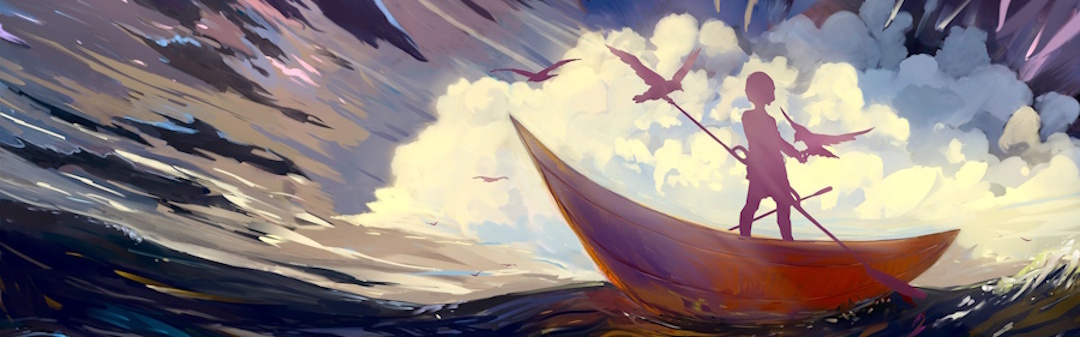 Sail Away by Hangmoon Alexander Komarov
There are a few methods to reach the Region of Dreams, whether it is consciously or not, and physically or not. A traveler choosing to travel there physically must know that they will be subjected to the whims of the dreams they enter and risk being injured or die, unlike an unconscious dreamer whose mind is within its own dreamscape. A physical traveler must also be aware they can stumble into the dreamscape of a powerful entity, and could potentially become trapped within it. (Note: Unlike the normal rules for dreaming, items used, spells cast, and other consumables are still gone when you return to the waking world after leaving the Region of Dreams if it was accessed physically. Likewise, items you gain and experience you accumulate while you were there remain with you.)
When living creatures fall asleep, their mind wanders to the Region of Dreams via the Veil of Sleep without ever being conscious of it. The Veil of Sleep is a colorful expanse of energy that marks a planar boundary between the planes and the Region of Dreams. This shimmering curtain of vaporous color resembles the northern lights visible on the Material Plane and is also called the Wall of Color. Contrary to its name, the Wall of Color doesn’t present a physical impediment to movement. As such, those who have ventured beyond it prefer to call it by another name: the Veil of Sleep. This curtain resonates with the dreams of the inhabitants of the planes and could be described as a reflection of reality. When an entity dreams, a portion of its inner being resonates with this reflection, creating a ‘’dream-self’’. This dream-self is connected both with the physical body and the dream occurring beyond the Veil of Sleep, within the Region of Dreams. This is similar to the way an Ethereal traveler exists both on the Border Ethereal and an adjacent plane simultaneously. The dream-self of the dreamer reaches its own dreamscape while its physical body remains on the original plane. Once the dreamer awakens, the mind returns to the body and the dreamscape usually fades back into undifferentiated dream-stuff. Sometimes, dreamscapes linger or pass into the Dreamheart, taking on a more permanent reality. Only dreamers can pass beyond the Veil of Sleep and enter the Region of Dreams that exists within it. Under normal circumstances, someone traveling through the planes would never accidentally wander into a dream when passing through the Wall of Color. Although the Wall of Color serves as the boundary between the planes and the Region of Dreams, an observer gazing through the Wall of Color wouldn’t be able to see what dreams are occurring within. However, someone particularly sensitive could potentially hear distant voices or see some unexplainable movement.
While sleeping, a creature’s mind reaches the Region of Dreams via the Veil of Sleep. While it isn’t possible to enter the Region of Dreams via the Veil of Sleep, it is possible to enter it by other means as described below:
It is possible to physically enter the Region of Dreams by finding one of the extremely rare physical portals leading to it. These portals could look like anything or be anything. There is no existing tuning fork that can allow access to the Region of Dreams. If someone would want to Plane Shift to the region, they would need the ability to do so without the need for the material component for the spell.
Gods or other powerful entities, can choose to interfere with the dreams of their followers, sending them visions or even transporting them in another’s dream. Certain dark powers of the Demiplane of Dread are well known for capturing dreamers and thrusting them into nightmarish dreamscapes on a whim. On other occasions, these entities could also choose to send living creatures physically to the Region of Dreams or a specific dreamscape for their own design.
Some spellcasters are able to send dream images to others via the dream spell. Although the physical self of the messenger doesn’t go there directly, it sends the dream-self within the dream of another. Under normal circumstances, there are no risks to doing so for the messenger. However, it is not impossible, if there’s something else at play (as determined by the DM) that the dream-self could potentially become trapped if things go awry, which would leave the messenger’s body in a trance state.
Although this forsaken place doesn’t allow one to travel directly to the Region of Dreams, the unfortunate travelers who find themselves within the Nightmare Lands of the Demiplane of Dread can move through the demiplane and physically enter some of the horrific dreamscapes found there. However, most individuals who have wandered there have been rendered so insane they never came back to tell the tale.
Given the Demiplane of Nightmares is adjacent to the Region of Dreams, a traveler could move from one to the other.
When falling asleep, a creature manifests a ‘’dream-self’’, an echo of the self that moves through the mental landscape of the Regions of the Dream. This dream-self is a reflection of reality and is like the individual’s true self, with possible few exceptions. Thus, a dreamer will appear in their dream as they are on the Material Plane. This means their abilities, ability scores, hit points, etc. remain the same as they were before falling asleep. They even gain dream-stuff equivalent to their usually carried or worn items.
Normally, a dreamer dying within a dream would immediately wake up, unharmed, minus the possible increased heart rate from the anxiety caused by the thought of dying. Therefore, in most instances, a dreamer will wake from their dream without ever coming to harm.
Regardless, accessing the Region of Dreams is not completely safe whether it is done consciously or not. On extremely rare occasions, a dreamer’s mind can be pulled within the Dreamheart and be slain there, which causes the dreamer to die, and worse, its soul is trapped within it as well. However, these cases are unusual and happen so infrequently not much is known about them in the Forgotten Realms. As such, these deaths, which amount to less than 1 per 2 millions deaths in the world, are usually ascribed to natural causes.
Anyone physically traveling to the Region of Dreams could suffer injuries or harm as they would on the Material Plane.
For unknown reasons, the Ethereal Plane and the Region of Dreams have weird interactions with one another. The chance of finding a portal to the Region of Dreams is slightly greater on the Ethereal Plane than any other plane, but remains rare. On the Ethereal Plane, a dream can sometimes gain a particular distinctiveness, forming a temporary convex bulge in the Wall of Color.
This outgrowth usually appears to be no more than 5-10 feet in diameter, but within it is a full-fledged dreamscape. Dreamscape Bulges typically form through extreme grief or happiness from the dreamer, magical effects (such as the dream spell), psionic ability, or the attention of a god who wishes to speak to a follower in a prophetic vision. Because the Wall of Color is endless and Dreamscape Bulges are rare and short lived, most Ethereal travelers never encounter one. Dreamscape Bulges disappear when its associated dreamscape does. Dreamscapes usually “burst“ and dissolve when the dreamer within it awakens, although sometimes dreamscapes have extended or permanent durations if maintained by unusual circumstances or magic.
Usually, the elements from a ruptured dreamscape will ‘’evaporate’’ too quickly for anyone to be noticed, but as mentioned earlier, it is not always the case. However, when the rupture occurs in relation with the Ethereal Plane, the rupture will be larger than it would be with any other plane, thus allowing a larger part of the dreamscape to break off from it. After passing through the rupture to make its way on the Ethereal Plane, it will usually remain for more than the usual 1d100 hours. These large clumps of landscape are called ‘’Ethereal Dreambergs’’ and the reason why it happens only on the Ethereal Plane is unknown.
Those who have ventured to the Astral Plane are well aware of the Psychic Winds (for more information on Psychic Winds, see the Dungeon Master’s Guide, WotC, p. 47). Among the different types of Psychic Winds in the Astral Plane are the Astral Dreamstorms. The Astral Dreamstorms are fueled by the energy of dreams rather than conscious thought. They are rare, but when they blow through the Astral Plane, and sometimes through the planes that it borders, they can affect the sleepers they cross. Indeed, an Astral Dreamstorm can only affect creatures that are sleeping and they are the only known type of psychic wind that can affect someone not on the Astral Plane. When affected, the sleeper’s mind is filled with strange and unfamiliar images, suddenly dreaming someone else’s dream.
The sleeper then wakes up the next day without feeling rested and must succeed on a DC 15 Intelligence saving throw or suffer one level of exhaustion. Additionally, depending on the nature of this intrusive dream, the sleeper may suffer a variety of different effects as determined by the DM. For example, a sleeper may wake and suffer from one or multiple of the following conditions/effects: frightened, madness, a long-lasting phobia related to the dream.
Planar Interactions
The Region of Dreams can interact in eerie ways with other planes. You can use the effects above as inspiration and feel free to create strange effects that could arise within another plane as a result of The Region of Dreams interacting with it.
Moreover, a whole group of people sleeping during a dreamstorm could experience the same dream, which often results in mass hysteria and widespread paranoia. Within the Realms, such occurence is often attributed to a dark omen or an augury of impending doom.
The dreamscapes, in all their infinite numbers, are only the edge of the Region of Dreams. They border the Dreamheart, a realm where dreamers can die in their dreams while their body is on another plane. The Dreamheart is a combination of all the dream-born landscapes and creatures that grow and vanish without any logical explanation. It is a chaotic place, where parts of some dreamscapes that were pulled in the Dreamheart after its dreamer wakes up, float adrift sometimes merged with one another. No one account can accurately encompass the Dreamheart, much as no dreamer can completely understand all dreams.
When within the Region of Dreams, one can physically travel into the Dreamheart, but should be wary; a random flare of fire or dream-born creature could just appear out of the chaos and take the life of an inexperienced traveler. Even when a dreamer’s physical body is safe and sound on the Material Plane, any harm that comes to its dream-self when in the Dreamheart affects its physical body as well. In simpler terms, if your dream-self dies within the Dreamheart, you die as well. When the dream-self or a physical traveler dies within the Dreamheart, its soul becomes trapped within the Dreamheart forever. Any creature whose soul is trapped within the Dreamheart, can’t be revived by any means short of a wish spell, at the DM’s discretion. When inside the Dreamheart, one can encounter a devastating storm known as a Dreamheart Tempest.
A Dreamheart Tempest is a violent winding storm of chaotic raw energy which is harmful and difficult to endure. Because of their nature, the size and intensity of Dreamheart Tempests greatly vary from one another. Mechanically speaking, for each minute a creature is exposed to the Dreamheart Tempest, the creature takes (a minimum of) 3d6 force damage and must succeed on a DC 15 (or higher) Constitution saving throw or suffer a level of exhaustion. As it is noted in the parenthesis, the DC and damage presented in this paragraph are the minimum for a Dreamheart Tempest, thus it would be common to find Dreamheart Tempests that deal more damage and that have a higher DC.
Like any storm, each Dreamheart Tempest has an eye. A traveler can visit the Eye of a Dreamheart Tempest, but each visitor comes away with a completely different understanding of what hides within the Eye. Some meet deities, others find long-dead loved ones, and others achieve unparalleled personal insight. Of course, these meetings are more akin to visions or illusions rather than an actual meeting, but that isn’t perfectly clear to the visitors of the Eye.
Although it is called the Region of Dreams, the dreamscapes within it sometimes contain vile creatures, landscapes and images, charged with dark emotions. Sometimes, these elements rampage from dreamscape to dreamscape, giving rise to terrible nightmares. Whether these nightmares originate from dreamers’ dark thoughts or have been birthed by the near presence of the Demiplane of Nightmares is unclear, but one thing remains certain: the Demiplane of Nightmares is a place where one’s darkest thoughts and fears become reality.
The Demiplane of Nightmares is an awful place, with nothing but horrible sights. Its particular landscape with eerie angles and anomalous geometry is particularly repulsive and uninviting to most non-natives.
The Demiplane of Nightmares is located coterminously with the Region of Dreams, the Ethereal Plane and the Far Realm. The boundary between the Demiplane and the Far Realm is extremely thin, thus it is constantly tainted and corrupted by the influences of the Far Realm.
The majority of the inhabitants of the Demiplane of Nightmares are hostile and horrifying beings, creatures whose essence repels even the most twisted minded individuals that aren’t native to this demiplane. In turn, these creatures find non-natives to be disgusting.
However, there aren’t only hostile and horrifying creatures within the Demiplane of Nightmares. Among these non-hostile creatures are the Diaboli. The Diaboli are fiendish looking humanoids who are native to the Demiplane of Nightmares and tend to value freedom and spontaneity. They are usually of a chaotic good alignment. They can sometimes be found on the Material Plane since some of them have left and formed communities there. (For more information read Dragon 327, “Diaboli”)
Those who have found their way out of the Demiplane of Dread say that the dark powers must have pulled a portion of the Demiplane of Nightmares into Ravenloft. These Nightmare Lands are said to represent some of the most horrifying areas in Ravenloft. It is yet unknown whether these rumors are true or not, but one thing remains clear; those who went to the Nightmare Lands have been changed after their time spent there and are no longer the same now that they have been released.
Players can enter the Region of Dreams physically or as their dream-self when they are asleep. When asleep, at a DM discretion, PCs could become aware that they are in a dream and have an adventure in the Region of Dreams as their dream-self. Please be aware that unless PCs enter the Region of Dreams physically, they cannot gain, nor lose items and they cannot learn spells.
This document is an adaptation of various materials regarding the Region of Dreams made for our server and serves as canon for server play. Here is a list of the various documentation that has been used to inspire and create this document.
Advanced D&D 2nd edition
D&D 3rd edition
D&D 5th edition
This document has been created by Kathy in collaboration with Luolang and the Lore Consultants of the Hawthorne Dungeons & Dragons Guild.
Background Image: White Blue Red clouds by Hangmoon Alexander Komarov
 Hawthorne Guild